Overview
PSMP consumables are used at every step. The products used at each step are listed below.
- Wafer MountWafer mounted on tapeWafer ring
- DicingCut into individual chipsRing, cassette
- Die BondingChips attached to substrateMagazine, block, collet
- Wire BondingGold wire connectionMagazine, clamp
- MoldingResin encapsulationMagazine
- ReflowSolder joiningJig, boat, stencil
- Test & ShippingInspection, packingCarrier
Wafer Mount & Dicing
Wafer Mount · Dicing
The thinned wafer is mounted on dicing tape and held taut by a ring frame. The rings go into a cassette and then into the dicing equipment, which aligns them by the ring's flats and notches.
Die Bonding
Die Bonding
Chips are picked one by one from the tape and attached to a leadframe or substrate. Strips come out of the magazine one at a time and sit on the block at the bonding position, while a collet picks and places the chips.
Wire Bonding & Molding
Wire Bonding · Molding
A clamp presses and holds the leadframe while fine gold wire connects the chip pads to the leads. Bonded strips go back into magazines and move to the molding equipment.
Flip Chip & Reflow
Flip Chip · Reflow
The chip is flipped so its bumps meet the substrate, then solder is melted in a reflow oven to bond them. Boats and jigs hold the substrate so it does not warp under heat.
Storage, Transfer & Cleaning
Storage · Transfer · Cleaning
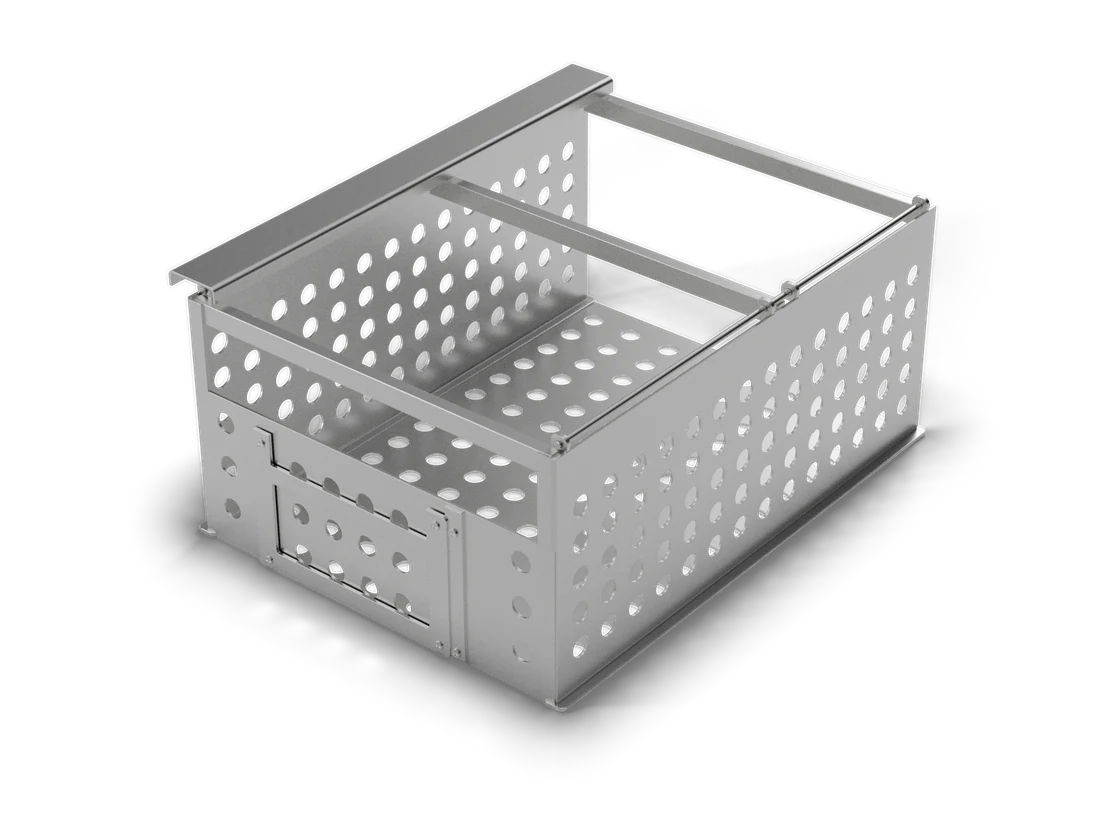
Between processes, magazines and cassettes travel on carriers. Perforated carriers can stay in use through cleaning and drying.
Material Choice by Process
Even for the same magazine, the material depends on process temperature and ESD control requirements. The table below is a starting point; the final material is decided after checking your process conditions.